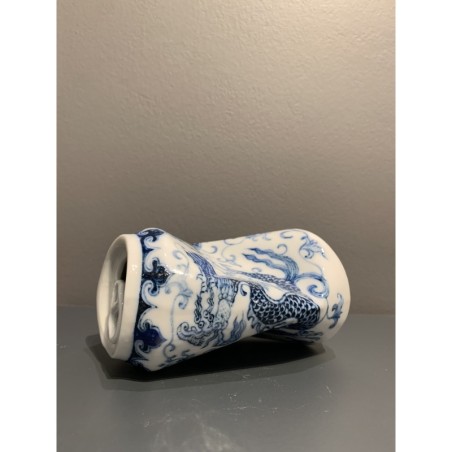
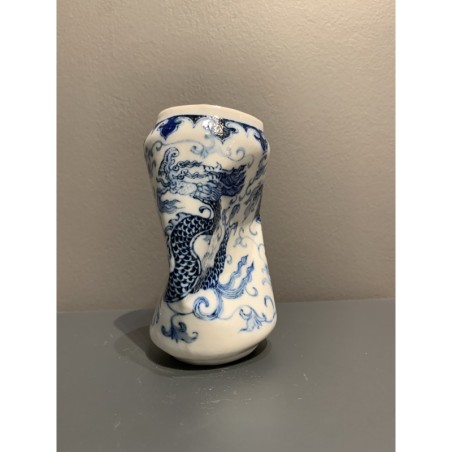
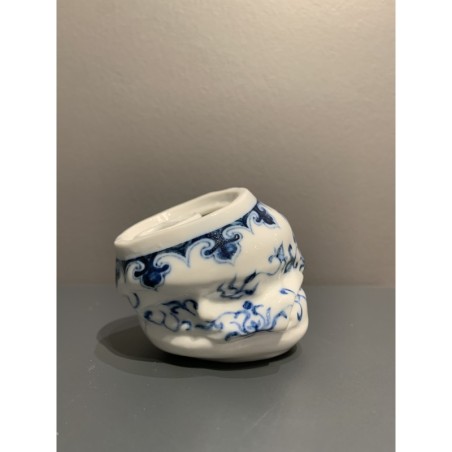
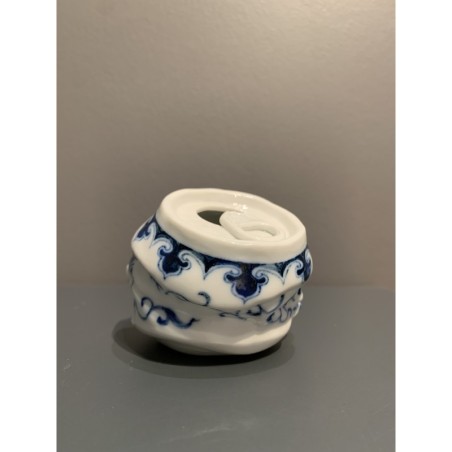
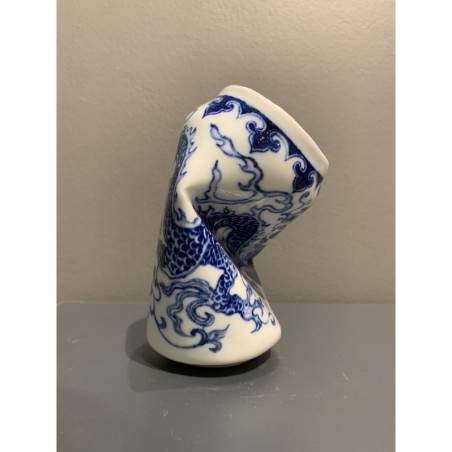
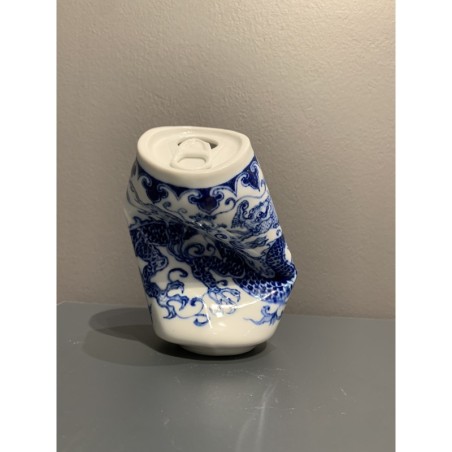
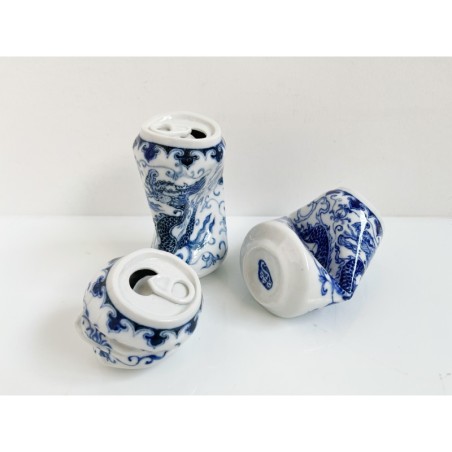
Born in Qingdao, China, in 1974 and dividing his time between Beijing and Darmstadt, Lei Xue brings classical Chinese ceramics into dialogue with contemporary pop culture. His signature series "Drinking Tea" reimagines crushed cans as fine hand-painted porcelain in blue Ming motifs, questioning contemporary consumption against the ritual of tea. Working across sculptural ceramics, watercolor on rice paper and video, his poetic work explores the tensions between East and West. Discover his world at Galerie Le Cube Vernet, in Avignon.
Lei Xue: Chinese artist blending tradition and modernity at Le Cube Vernet Gallery, Avignon
Lei Xue, born in Qingdao (China) in 1974 and living between Beijing and Darmstadt, explores the dialogue between classical Chinese ceramics and contemporary pop culture, in works to be discovered at Le Cube Vernet Gallery, Avignon.
"Drinking Tea" Series: Ming-style porcelain cans revisited in Avignon
Lei Xue’s iconic Drinking Tea series features crushed cans made of fine porcelain, hand-painted with blue Ming motifs, questioning contemporary consumption versus the traditional tea ritual.
Poetic and thoughtful style: porcelain and painting at Le Cube Vernet Gallery
Multidisciplinary, Lei Xue combines sculptural ceramics, watercolors on rice paper, and video installations. His poetic and conceptual work invites reflection on identity, innovation, and tensions between Eastern and Western cultures.
Lei Xue’s unique international and academic journey presented at Le Cube Vernet Gallery
Trained in China and a graduate of the Kunsthochschule Kassel in 2005, Lei Xue taught at Renmin University in Beijing (2012–2013). He has exhibited since 2005 in Germany, Austria, China, and the UK, including solo shows in renowned galleries.
Discover at Le Cube Vernet Gallery: the subtle alliance of ancient art and contemporary vision
Come and experience the unique universe of Lei Xue at Le Cube Vernet Gallery in Avignon: an artistic approach where the finesse of traditional porcelain meets contemporary irony, offering both a visual and philosophical view of the modern world.